Why Tomorrow’s World Takes Years to Arrive, Then Changes Everything
DENVER, Colo. (247marketnews.com) — From Tesla’s (NASDAQ:TSLA) rocket-powered Roadster to Xeriant’s (OTCQB:XERI) fire-resistant NexBoard, history’s biggest technological breakthroughs share a common pattern: years of skepticism, setbacks and painstaking development before the moment when the impossible starts looking inevitable.
Tesla’s flying Roadster: Nine years to reach the spectacular
On October 15, 2026, Tesla gave the world a demonstration that seemed ripped from the pages of science fiction: a driverless Roadster climbing an inverted ramp, holding itself upside down with an underbody suction system, then launching into the air, rotating and landing with the assistance of rocket-style thrusters developed with SpaceX (NASDAQ:SPCX).
The spectacle was extraordinary. The timeline was just as revealing.
When Elon Musk unveiled the second-generation Tesla Roadster in November 2017, the promise was a production electric supercar that would push the boundaries of acceleration and performance. Deliveries were initially anticipated in 2020. Instead, the years passed, expectations grew, and the car became a symbol of a familiar problem in technology: the distance between announcing a breakthrough and delivering one.
Now, nearly nine years later, the redesigned Roadster has finally taken center stage. Tesla is targeting production in 2028, and the company has presented three versions: Performance, Thrust and Rocket. The highest-end Rocket configuration features ten cold-gas thrusters and is designed to deliver capabilities far beyond those of a conventional sports car. Tesla has claimed acceleration from zero to 60 mph in less than a second.
Musk’s own words from the original vision are instructive. In 2018, he wrote of the proposed SpaceX option package: “Maybe they will even allow the car to fly …”
That once-speculative idea has now been demonstrated in a controlled setting, but the flying configurations have not been established as approved for ordinary public-road use.
Breakthrough technology is not simply about whether something can be made to work once. It is about whether it can be engineered reliably, manufactured economically, certified safely and delivered to customers.
The Roadster story is therefore bigger than a flying-car headline. It is a case study in the extraordinary patience and discipline required to turn an audacious concept into a commercial product and Tesla is not the only company confronting that challenge.
Xeriant’s NexBoard: The less Flashy breakthrough that could matter even more
If Tesla represents the spectacular side of technological ambition, Xeriant (OTCQB:XERI) represents a different kind of breakthrough: one that could eventually change how buildings are constructed, protected and repaired.
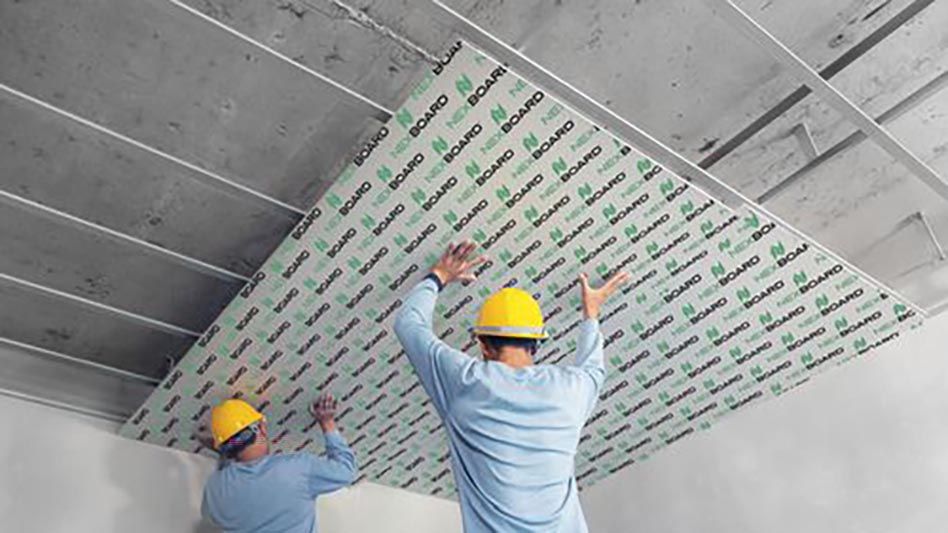
The company’s NexBoard is a composite construction panel made using recycled plastic and fiber waste, incorporating its proprietary Durazite fire-retardant technology. The concept targets several persistent construction challenges: fire resistance, moisture exposure, mold, durability, material handling and the cost of transporting bulky building products.
The opportunity is significant, as building codes are evolving, wildfire risks are raising concerns about combustible materials, and the construction industry faces pressure to improve resilience while controlling costs. A panel that combines several useful properties in one product could appeal to builders looking to simplify material selection and installation.
Creating the solution is much harder than it sounds and many attempts to make the perfect board failed.
However, in 2026, NexBoard passed several important milestones. Xeriant announced an ASTM E84 Class A fire rating in June, reported passing the NFPA 286 room-corner fire test, and announced the initiation of commercial production on August 31. On September 29, the company reported achieving nearly a 25% reduction in panel weight while maintaining the same dimensions.
Those are developments worth watching. A lighter panel could reduce shipping expenses and simplify handling on construction sites, while validated fire-performance characteristics could help the product compete in applications where safety requirements are especially demanding.
The company itself described the manufacturing milestone as a defining moment. CEO Keith Duffy said, “Starting commercial-level production is a defining milestone for NexBoard and Xeriant.”
Please click here to watch the timelapse version of Xeriant’s 80-Minute NexBoard internal flame test, or click here for the full-length version.
The strongest evidence that long development cycles can pay off comes from technologies that have already crossed that finish line.
CRISPR gene editing goes from laboratory science to approved medicine
For decades, the possibility of correcting disease at the genetic level belonged more to scientific aspiration than routine medical practice. Researchers needed to understand how to target DNA, edit it accurately, manufacture therapies safely and demonstrate that the results justified the risks.

Then came CRISPR.
In December 2023, the U.S. Food and Drug Administration approved Casgevy, developed by Vertex Pharmaceuticals (NASDAQ:VRTX) and CRISPR Therapeutics, as the first CRISPR-based gene-editing therapy approved in the United States. The treatment was initially authorized for eligible patients aged 12 and older with sickle cell disease. Further approvals expanded its use to transfusion-dependent beta thalassemia and, in 2026, to younger patients.
The science is remarkable. Casgevy uses CRISPR/Cas9 to edit a patient’s own blood stem cells, with the aim of increasing fetal hemoglobin production. For eligible patients with severe sickle cell disease, the treatment can substantially reduce or eliminate painful vaso-occlusive crises. It is a one-time treatment approach, although the process involves intensive medical preparation and specialized care.
This is not a futuristic promise awaiting its first customer. It is an approved therapy that has entered commercial use.
The lesson is powerful. A technology can take years of research, enormous resources and multiple regulatory steps to reach the clinic. Yet once it succeeds, the implications can extend far beyond a single product.
CRISPR is not merely another drug-development story. It is a new way of approaching disease.
That is what makes Vertex an instructive example of technological maturation: the breakthrough is real, the therapy is commercial, and the next challenge is expanding access while demonstrating durable outcomes.
Robotic surgery took years to prove itself and built an industry
Before robotic-assisted surgery became a familiar feature of modern operating rooms, the idea presented formidable engineering challenges. A machine had to translate a surgeon’s movements into precise instrument actions, deliver useful visualization, fit into surgical workflows and satisfy demanding safety requirements.
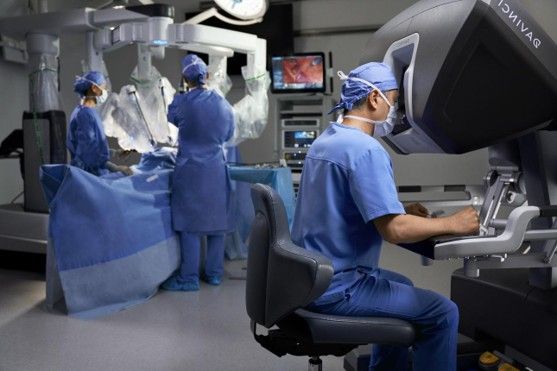
Intuitive Surgical (NASDAQ:ISRG) was founded in 1995. Its da Vinci system reached human clinical use during the late 1990s and received FDA clearance for general laparoscopic surgery in 2000. What followed was not an overnight revolution, but years of refinements, new applications, international expansion and growing acceptance among surgeons and hospitals.
The breakthrough was not a robot independently replacing a surgeon. It was a system that gave surgeons computer-assisted control of specialized instruments, with magnified three-dimensional visualization and articulated movements designed for minimally invasive procedures.
Over time, Intuitive expanded the da Vinci platform across multiple generations and broadened its commercial offering into additional procedures and diagnostic technologies. The company now operates in a market built around equipment, instruments, accessories, service and recurring customer relationships.
Why is that important?
Because technological breakthroughs create durable businesses when the innovation solves a problem that customers are willing to pay to solve and when the company can keep improving the product after the initial launch.
Robotic surgery is a case study in that process. Years of development and adoption built the foundation for an established medical-technology business. The commercial opportunity did not disappear when the first system shipped; it grew as hospitals gained experience, surgeons trained and the platform evolved.
The comparison with Tesla and Xeriant is instructive. All three are pursuing engineering-intensive technologies, but they sit at different stages of the commercialization journey. Intuitive demonstrates what can happen after a technology becomes embedded in a customer’s everyday operations.
It is the difference between a breakthrough demonstration and a breakthrough business.
About 24/7 Market News
In today’s fast-moving markets, visibility is everything and 24/7 Market News (24/7) provides a powerful suite of investor relations and public relations solutions designed to elevate your company’s profile quickly and effectively. Whether you’re an established name seeking broader awareness, or a micro-cap looking to break out of obscurity, 24/7 delivers targeted, high-impact coverage through timely news distribution, analyst report placements, featured editorials, and multi-channel amplification across financial platforms, social media, and investor communities. Our services help cut through the noise, attract institutional interest, drive exposure, and build long-term shareholder credibility, all while maintaining full SEC compliance and transparency. For Analyst Report coverage, custom IR campaigns, press release syndication, or other tailored investor and public relations solutions, contactsales@247marketnews.com to discuss how 24/7 can help accelerate your company’s visibility and valuation trajectory.
PAID EDITORIAL DISCLOSURE: This editorial communication intended for informational purposes only. 247 is a third-party media provider and the editor of this article holds a personal investment position in XERI. This ownership may be considered a potential conflict of interest. Readers are encouraged to conduct their own due diligence and consult with a qualified financial advisor before making any investment decisions. The editor may be compensated for providing future XERI market outreach and other services. This press release may include technical analysis and should not be construed as financial or investment advice. Trading stocks involves risks, and readers should consult with their financial advisor before making investment decisions. Please review 247’s Full Disclaimer https://www.247marketnews.com/disclaimer/.
Important Editorial Note: 247 highlights companies approaching significant catalysts and inflection points. This report reflects information available at the time of publication. Since developments can occur rapidly, readers should independently verify current information and review all company filings and disclosures.
CONTACT:
24/7 Market News
Editor@247marketnews.com
Cautionary Note Regarding Forward-Looking Statements
This press release contains forward-looking statements that are subject to various risks and uncertainties. Such statements include statements regarding the Company’s ability to grow its business and other statements that are not historical facts, including statements which may be accompanied by the words “intends,” “may,” “will,” “plans,” “expects,” “anticipates,” “projects,” “predicts,” “estimates,” “aims,” “believes,” “hopes,” “potential” or similar words. Actual results could differ materially from those described in these forward-looking statements due to a number of factors, including without limitation, the Company’s ability to continue as a going concern, general economic conditions, and other risk factors detailed in the Company’s filings with the SEC. The forward-looking statements contained in this press release are made as of the date of this press release, and the Company does not undertake any responsibility to update such forward-looking statements except in accordance with applicable law.